
Top In-Demand Jobs for Career Changers in 2026
Planning a career switch in 2026? Explore the most in-demand jobs, including AI-driven roles, and learn how to transition successfully in today's evolving job market.

There was a time when changing careers felt like starting over. It came with uncertainty, risk, and often a quiet fear of losing stability. People would stay in the same field for years, even when they knew it was no longer right for them, simply because switching felt too complicated.
That reality has changed!
In 2026, career switching is no longer a fallback option. It's becoming a calculated move. And one of the biggest reasons behind this shift is something we can't ignore anymore, the rapid evolution of artificial intelligence.
AI is not just another technological trend. It is fundamentally reshaping how work gets done. Tasks that once required hours of manual effort are now automated. Entire workflows are being redefined. And naturally, the job market is adjusting to this new reality.
But here's where it gets interesting.
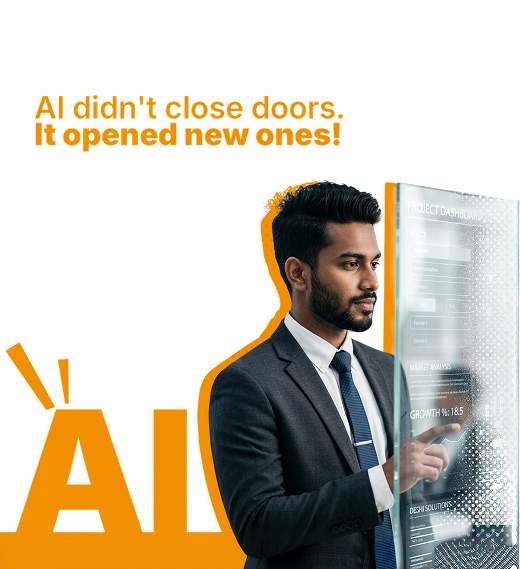
AI is not only replacing certain types of work, it is also creating entirely new opportunities. And for career changers, this creates a unique advantage. You are not competing with people who have been doing the same job for 15 years. You are entering fields that are still evolving, where adaptability matters more than long-term experience.
If you look closely, the demand is not just for technical experts. It is for people who can work alongside AI, use it effectively, and apply it within different industries.
This is why the idea of "in-demand jobs" has changed. It's no longer just about traditional roles. It's about roles that are AI-enabled, digital-first, and adaptable.
If you look closely, the demand is not just for technical experts. It is for people who can work alongside AI, use it effectively, and apply it within different industries.
One of the clearest examples of this shift is in data-related roles. Data analysts continue to be in high demand, but their work is evolving. With AI tools assisting in data processing and visualization, the real value now lies in interpretation. Companies don't just need data, they need people who can understand what that data means and make decisions from it. This makes data analysis one of the most accessible and strategic entry points for career changers.
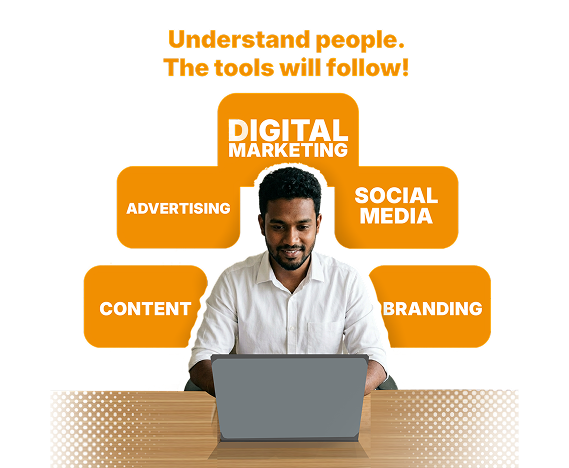
Digital marketing is another area where AI has completely transformed the landscape. Content creation, audience targeting, performance tracking, everything is now influenced by AI. But instead of reducing opportunities, it has expanded them. Businesses need people who can combine creativity with data-driven thinking, who can use AI tools but also understand human behavior. This balance is what makes digital marketing such a strong option for those switching careers.

Then there is UI and UX design, a field that is becoming even more important as digital products grow. AI can assist in design processes, but it cannot replace human understanding of user experience. Designers who can think from a user's perspective, test ideas, and refine interactions are still in high demand. For people coming from creative or even analytical backgrounds, this space offers a meaningful transition.
Software development remains one of the most talked-about fields, but even here, AI is changing the game. Coding is becoming more assisted, more efficient. This means the barrier to entry is lowering in some ways, but expectations are also shifting. Developers are now expected to solve problems, not just write code. For career changers, this means focusing less on memorizing syntax and more on understanding logic, systems, and problem-solving.
A newer category that is growing rapidly is AI and automation itself. Not everyone needs to become an AI engineer, but understanding how to use AI tools is quickly becoming a core skill across industries. Whether it's automating workflows, generating content, analyzing data, or improving productivity, AI literacy is becoming part of almost every role. This creates opportunities for people who are willing to learn and experiment.
Product management is another role that is evolving with AI. It requires a mix of business understanding, technical awareness, and strategic thinking. With AI influencing product decisions, people who can bridge the gap between technology and user needs are becoming increasingly valuable. This makes it an attractive option for those coming from business, operations, or even non-technical backgrounds.
Cybersecurity is also seeing increased demand, partly because of the same digital transformation driven by AI. As systems become more advanced, the risks also grow. Organizations are investing heavily in protecting their data and infrastructure, creating a steady demand for professionals in this space.

Content-related roles have also changed significantly. Writing is no longer just about putting words together. AI can generate content, but it still lacks context, originality, and strategic direction. This means content strategists, editors, and creators who understand audience behavior and brand positioning are more important than ever.
But understanding which roles are growing is only part of the story. The bigger challenge is how to actually move into them.
One of the most common mistakes career changers make is thinking they have to start from zero. That mindset is not just wrong, it is limiting. Most professionals already have transferable skills. Communication, problem-solving, project management, and analytical thinking are valuable across almost every modern role. The key is to identify these skills and present them in a way that aligns with the new field.
Another critical step is building proof. In a world where AI can generate resumes and certificates are everywhere, what stands out is real work. Projects, case studies, experiments, these show that you can actually apply what you've learned. Even small, self-initiated projects can make a big difference.

Your resume also needs to evolve with this shift. It should not just reflect your past, it should signal your direction. That means highlighting relevant skills, aligning with industry keywords, and showing how your experience connects to the role you are targeting. Many candidates are now using platforms like QuickCV to create tailored CVs for different roles, especially when transitioning across industries.
There is also a mindset element that often gets overlooked. Career switching in the age of AI requires continuous learning. The market is moving fast, and the ability to adapt is becoming more valuable than static expertise. There will be a phase where you feel like you are in between, not fully experienced, not completely new. That phase is uncomfortable, but it is also where growth happens.
If you step back and look at the bigger picture, the opportunity is clear. AI is not just changing jobs, it is reshaping how careers are built. Those who resist change may struggle, but those who adapt have more options than ever before.
So if you are considering a career switch in 2026, you are not late. In many ways, you are right on time.
Learn More
The real question is not whether jobs are available.
The real question is whether you are ready to evolve with them.
Start Your Career Journey Today!
Don't let a mediocre resume hold you back. Create a standout CV in minutes and increase your chances of landing interviews.